
3 Skill Sets Leaders Need To Succeed – By Tony Gambill
Research from McKinsey & Company reports that 40% to 50% of new leaders fail within the first 18 months. This low success rate is primarily because leaders are not equipped with the necessary skill sets to navigate the complexities of people and situations successfully. There is no silver bullet or one right way to be an effective leader, but all leaders should understand and actively develop the three skill sets necessary for long-term leadership success: Technical Leadership, Organizational Leadership and Self-Leadership.
Unfortunately, most leadership development literature experiences only focus on one or two of these foundational leadership skill sets, leaving leaders with a partial picture of what is needed of them to succeed in different environments. The weight and importance of these three skill sets are dictated by the context the leader operates within. Let’s explore.

1) Technical Leadership #
Most of the time, leaders are promoted based on the merits of their technical abilities. When a person demonstrates technical excellence, the organization, rightly or wrongly, usually rewards this person by giving them a promotion to a leadership role.
In fast-paced industries, leaders with strong technical capabilities or industry expertise can excel in roles where their knowledge or problem-solving skills often take center stage as innovation drives success. For example, a leader might succeed in a technical organization by driving innovation, even if they lack strong people skills. Advanced technical leadership abilities enable them to thrive in achieving critical organizational goals.
Technical Leadership is unique because most of these capabilities are measured by current and past technical accomplishments within one’s discipline. These capabilities focus on expertise, reputation, innovation and the management of technical systems and projects within this person’s discipline. Below is a list of different types of technical leadership.
- Technical / Industry Knowledge – Informed about industry trends and best practices and demonstrated expertise relevant to the leader’s field.
- Technical Thought Leadership: Driving innovation and influencing industry trends by sharing expertise, insights, and visionary technical solutions.
- Compelling Technical Vision: An inspiring, forward-looking technology vision and roadmap that influences and shapes future innovation.
- Technical Communication – Explaining technical concepts in a way that non-technical stakeholders can understand.
- Project Management – Leading technical projects to completion on time and within budget.
- Process/System Efficiency: Optimizing workflows and systems to maximize productivity, quality and resource utilization.
While Technical Leadership establishes credibility, Organizational Leadership transforms this expertise into results through effective team and vision management.
#
2) Organizational Leadership #
Consider a software engineer promoted to a leadership role. Their technical expertise builds credibility but may struggle to align and motivate teams to accomplish the organization’s goals without communication or management skills. This is why most leadership development programs, books, and articles primarily focus on this aspect of leadership. These organizational leadership skills help leaders create and maintain an environment where people feel connected, valued and capable of doing their best work towards achieving organizational objectives. Below is a list of typical organizational leadership skills.
- Vision: Creating and communicating a clear, inspiring future direction for the organization.
- Strategy and Execution: Developing plans and ensuring effective implementation to achieve organizational goals.
- Goal Setting: Defining specific, measurable, achievable, relevant, and time-bound objectives for success.
- Feedback: Providing constructive, actionable insights to improve performance and outcomes.
- Coaching: Guiding individuals to develop skills, confidence and achieve their potential.
- Delegation: Assigning tasks to team members based on their skills and strengths.
- Building Teams: Creating cohesive, collaborative groups with complementary talents to achieve shared goals.
While these skills are essential for driving teams and achieving goals, they can be rendered ineffective without the development of the next foundational skill set: Self-Leadership.
3) Self-Leadership #
We must first learn to lead ourselves before we can effectively lead others. The most successful leaders share a pattern of foundational Self-Leadership behaviors that allow them to demonstrate self-awareness, emotional intelligence, inclusion, mindfulness, empathy, social intelligence and learning agility during their most challenging and complex situations.
My book, Getting It Right When It Matters Most (Gambill and Carbonara, 2021), introduces the SOAR Self-Leadership Model.
The four phases of the model are Self, Outlook, Action and Reflection (SOAR). This model takes the fewest, most important knowledge and skills from each concept and places them into a person-centric, replicable, research-backed roadmap for developing your Self-Leadership abilities.
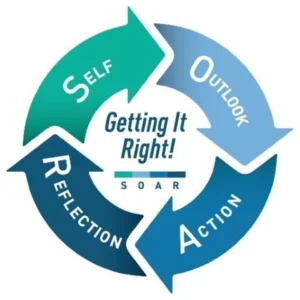
For better or worse, you bring Self to every important, complex and relational situation you encounter at work and in life. This interaction immediately impacts your Outlook, how you perceive the situation, which drives the Actions you select that lead to a positive, negative or neutral outcome. After the fact, you spend time in Reflection which accelerates continuous growth and greater awareness of Self.
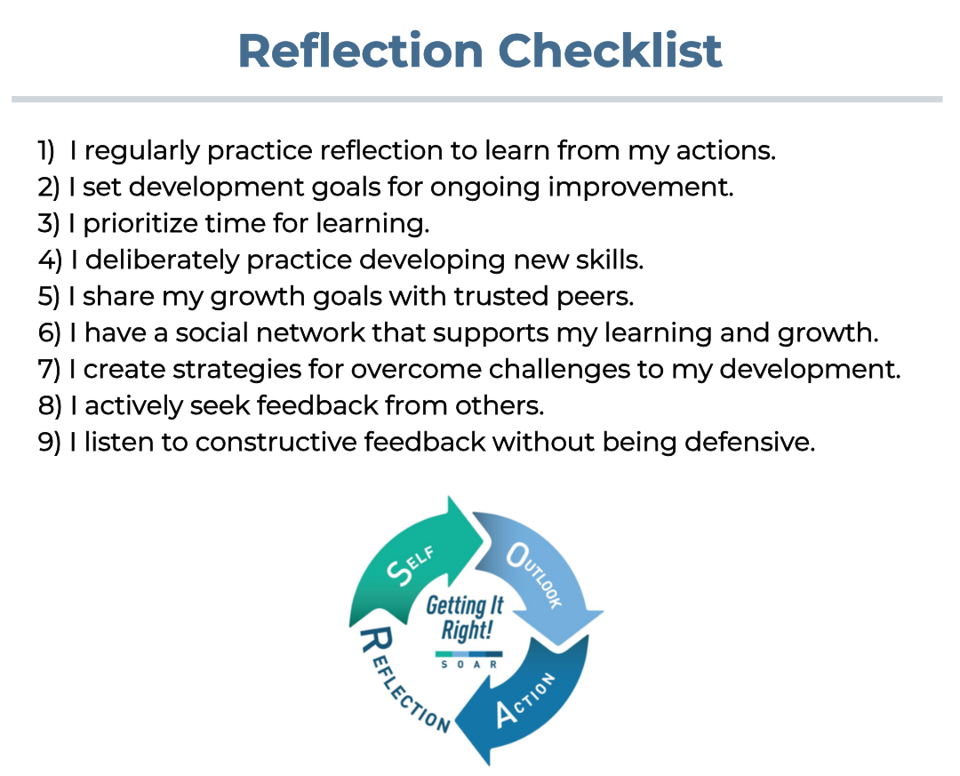
Below is a definition and checklist for each of the four phases of the SOAR Self-Leadership Model.
#
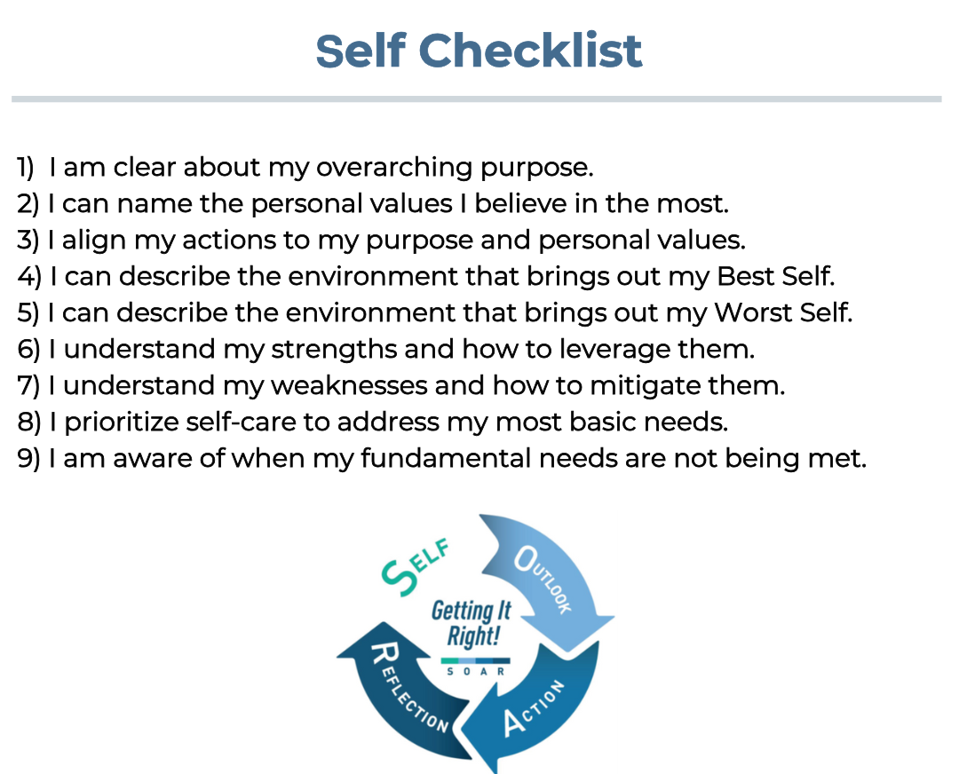
Self #
Understanding the unique you that has evolved based on your one-of-a-kind combination of personality, physical traits, intelligence, habits, beliefs, strengths and weaknesses.
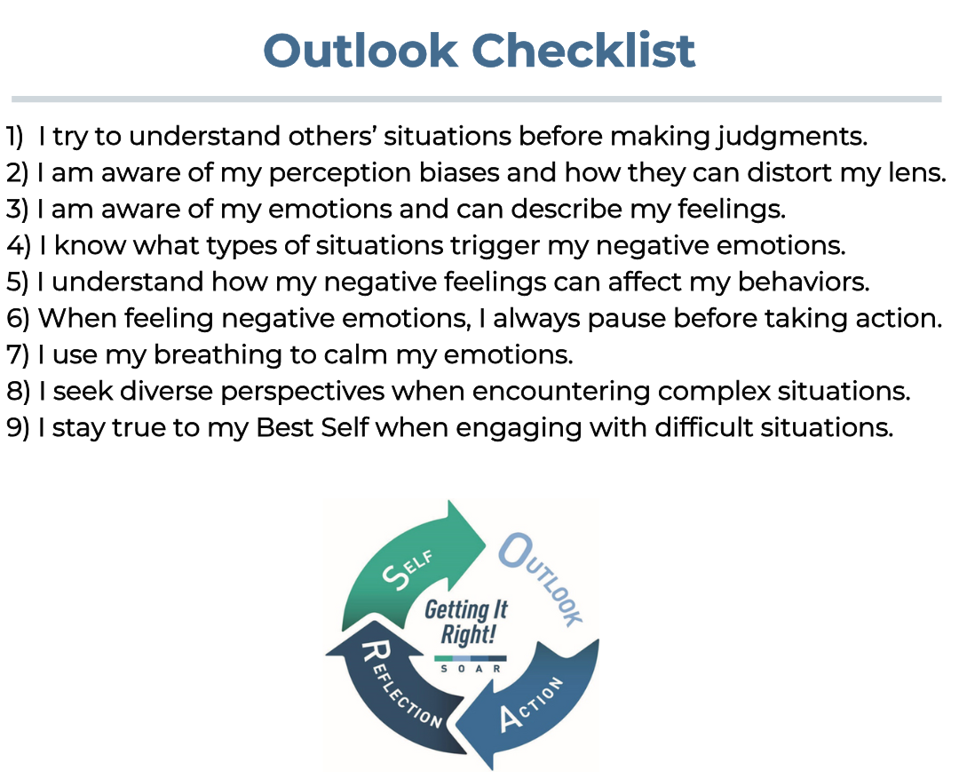
Outlook: #
Awareness of how our biases and emotions impact how we view situations.
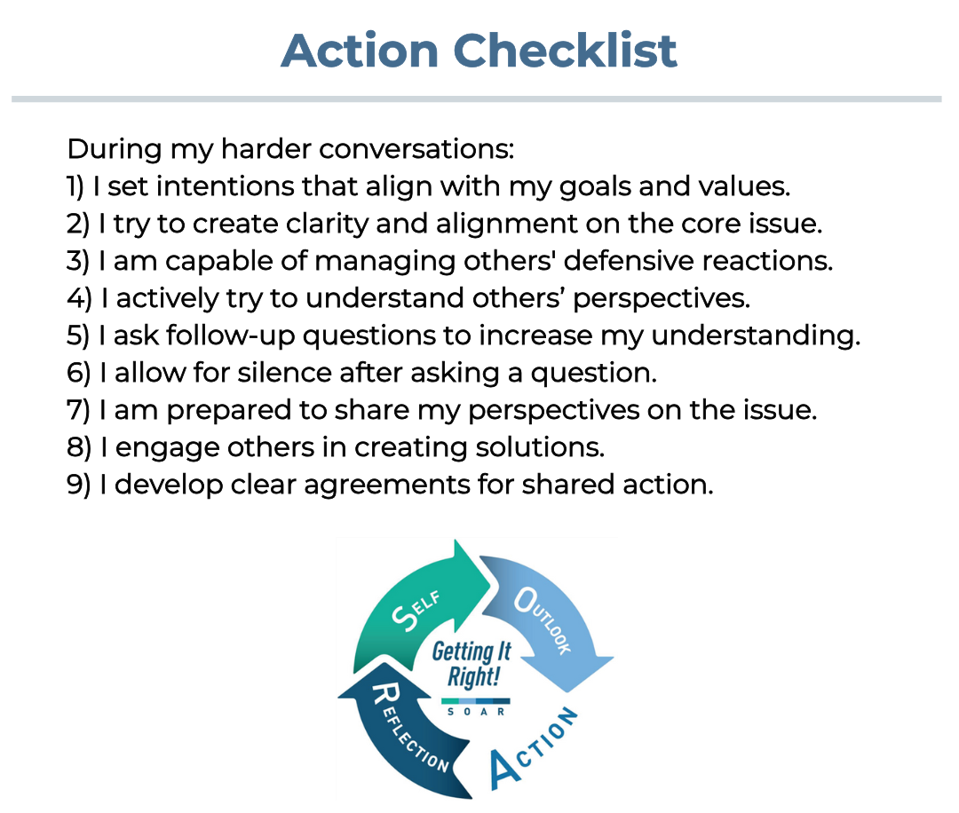
Action: #
The conversations that enable one to successfully advance their most important and complex situations that require strong relationships to succeed.
Reflection: #
The process of critically evaluating your behaviors, perspectives, habits and communication from previous actions to gain insights to adapt for future challenges.
How Does Context Impact A Leader’s Effectiveness? #
Leadership without understanding the context is like navigating without a map—decisions, behaviors, capabilities and prioritization will lack direction, relevance or effectiveness. Leaders who understand their leadership context maximize their impact, aligning their actions with their environment’s and stakeholders’ unique demands.
In highly innovative industries, Technical Leadership often takes precedence as leaders must spearhead groundbreaking ideas. However, in people-driven roles like HR, Organizational, and Self-Leadership play a more dominant role.
No one leadership style works best for all contexts. Leaders must understand and figure out how to operate effectively in their given circumstances, culture and situations. To thrive as a leader, start by assessing your strengths and weaknesses in these three skill areas. Seek feedback, embrace continuous learning, and adapt to the unique demands of your leadership context. The journey to impactful leadership begins with intentional development—what will you focus on first?
Follow Tony Gambill on LinkedIn. Check out his website or some of his other work.